
American witch hazel (Hamamelis virginiana) is one of nature’s most delightful surprises: a native shrub that saves its blooms for late fall, lighting up the garden just as everything else is going to sleep. Hardy in USDA zones 3 through 8, it’s a tough, adaptable plant that earns its place in the landscape many times over. It thrives in full sun to partial shade and does best in moist, well-drained, slightly acidic soil, though it’s tolerant of clay and periodic wet conditions. It’s also notably deer resistant, making it a reliable choice for gardens where browsing pressure is a constant battle.
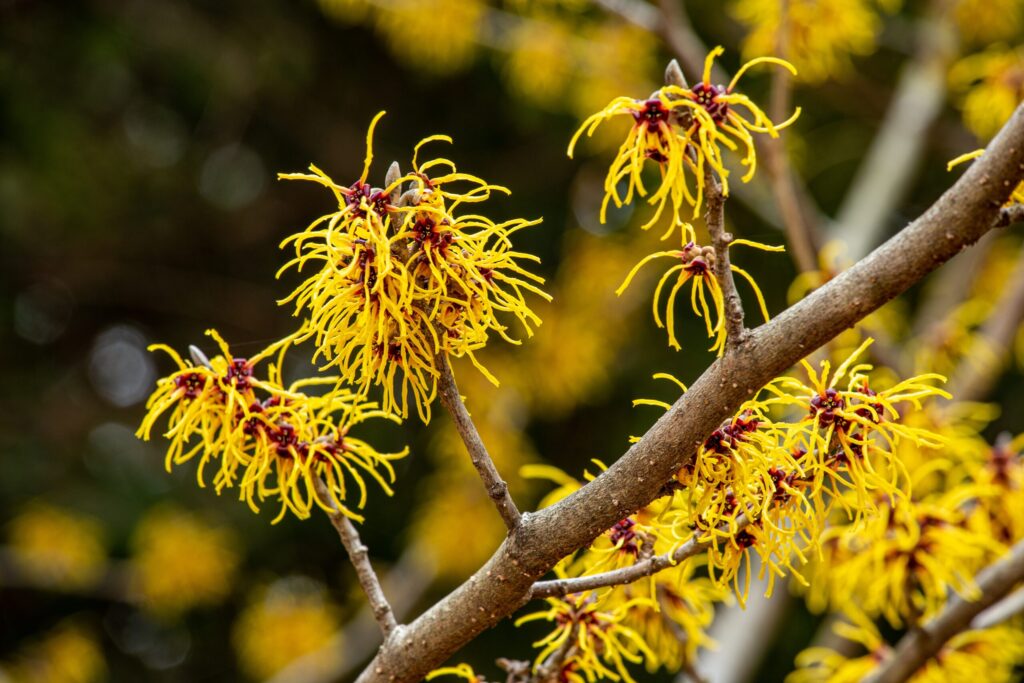
Native to eastern North America, American witch hazel grows as a large, multi-stemmed deciduous shrub or small tree, typically reaching 15 to 20 feet tall and wide at maturity. Its form is naturally open and arching, with a relaxed, woodland character that feels right at home in naturalistic plantings. In autumn, the foliage turns a warm golden yellow before dropping to reveal the real show: clusters of spidery, ribbon-like yellow flowers with a light, sweet fragrance. Bloom time runs from October through December, sometimes stretching into January in milder winters. These blooms are frost-tolerant and will curl up in a hard freeze only to unfurl again when temperatures rise. There’s simply nothing else blooming in the late fall garden that can compete with it.
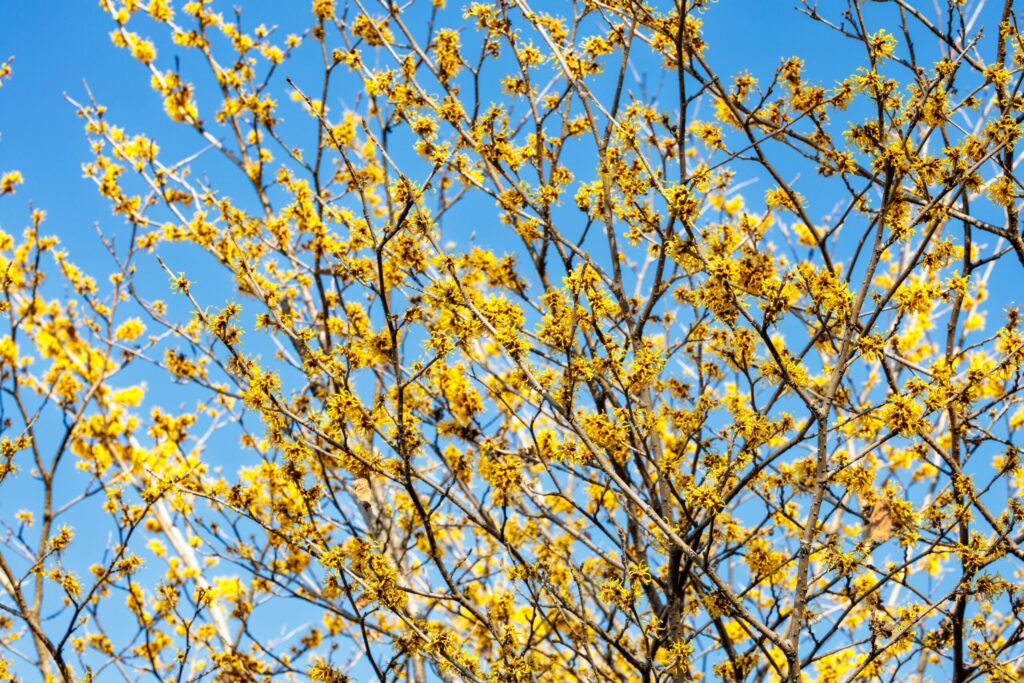
Beyond its flowers, American witch hazel offers year-round interest. Its leaves are attractive through the growing season, and the bark has a handsome gray-brown texture. The plant is also the source of witch hazel extract, the familiar astringent used in skincare and first aid, distilled from the bark and leaves. In the landscape, it works beautifully as a woodland edge specimen, a naturalized understory shrub, or a privacy screen along property lines. It pairs well with other native plants like ferns, trilliums, and serviceberries. Plant it where you’ll be able to see it from a window in November and December, and you’ll be rewarded every year.
Plant care
American witch hazel is a low-maintenance shrub once it’s established, but it does appreciate some attention in its first couple of years while it puts down roots.
Watering
Water regularly during the first growing season to help the plant establish a deep, strong root system. After that, it’s reasonably drought tolerant, though it performs best with consistent moisture. During prolonged dry spells, give it a deep soak every week or two. It won’t thrive in dry, sandy soil without supplemental irrigation.
Fertilizing
American witch hazel doesn’t need heavy feeding. A light application of a balanced, slow-release fertilizer in early spring is plenty. If your soil is naturally rich, you may not need to fertilize at all. Avoid high-nitrogen fertilizers, which push leafy growth at the expense of flowers.
Pruning
Prune sparingly and only after flowering is finished, in late winter or very early spring. Remove any dead, damaged, or crossing branches, and lightly shape if needed to maintain a pleasing form. Because witch hazel blooms on old wood, pruning before or during bloom will cost you flowers. Heavy pruning isn’t typically necessary and can actually diminish the plant’s graceful natural habit.
Mulching
Apply a 2 to 3 inch layer of organic mulch around the base of the plant, keeping it a few inches away from the main stems. This helps retain soil moisture, moderates soil temperature, and suppresses weeds. As it breaks down, it also improves soil quality over time.
Siting and landscape use
Think carefully about placement before you plant, since American witch hazel doesn’t love being moved once it’s established. It’s ideally suited to woodland gardens, rain gardens, and naturalized areas. It makes an excellent specimen plant where there’s room to appreciate its full, spreading form. Plant it near a path or outdoor seating area so you can enjoy the fragrance during its late-season bloom. It’s also a strong choice for erosion control on slopes and stream banks, thanks to its tolerance of moist conditions.
Wildlife value
American witch hazel is a standout plant for pollinators at a time of year when almost nothing else is blooming. Its late flowers provide a critical nectar source for witch hazel owlet moths (Pyrrhia alatastrigula) and other insects that remain active in fall. Its seeds are eaten by wild turkey, ruffed grouse, and various songbirds. Dense plantings also provide cover and nesting habitat for wildlife. If supporting native ecosystems is important to you, this is one of the most valuable shrubs you can add to your property.
Pest and disease
American witch hazel is largely trouble-free. It can occasionally be affected by powdery mildew, aphids, or galls caused by the witch hazel leaf gall aphid (Hormaphis hamamelidis), which produces distinctive cone-shaped growths on the leaves. These galls are unsightly but rarely cause serious harm to the plant. Good air circulation and avoiding overhead watering help prevent fungal issues. In general, this is a plant that takes care of itself.
Frequently asked questions
When does American witch hazel bloom? It blooms from October through December, making it one of the last flowering shrubs of the season. In mild years, you may see flowers lingering into January.
How big does American witch hazel get? It typically reaches 15 to 20 feet in both height and spread at maturity. It’s a large shrub, so give it room to grow without crowding.
Is American witch hazel the same as the witch hazel sold in drugstores? Yes, Hamamelis virginiana is the species from which commercial witch hazel extract is derived. The extract comes from the bark and leaves and has been used medicinally for centuries.
Can I grow American witch hazel in a small yard? It can work in smaller spaces if you’re thoughtful about placement, but it does get quite large. If space is limited, consider one of the hybrid witch hazels (Hamamelis x intermedia), which tend to be more compact and are available in a range of flower colors.
Is American witch hazel deer resistant? Yes, it’s considered deer resistant. While no plant is completely deer-proof, witch hazel is rarely browsed and is a smart choice for gardens in areas with high deer pressure.
Does it need a lot of sun? It’s adaptable. It blooms most prolifically in full sun but grows well in partial shade, which also suits its woodland character nicely.
Is American witch hazel native? Yes, it’s native to eastern North America, from Nova Scotia south to Florida and west to Nebraska. It’s an excellent choice for native plant gardens and pollinator-friendly landscapes.
Leave a Reply